Books and related classes

When I am not working on the research project, I join forces with friends on monograph writing and book editing, especially with those who also believe in investing into the next generation of researchers.

A follow-up work, which I do alone, is developing lecture courses for university students and exploration geologists from the oil and geothermal industry, which I try to combine with hands-on exercises, usually focused on reflection seismic interpretation and balancing.

Described below are four of my favorite books and associated series of lectures.

Strike-slip terrains and transform margins: structural architecture, thermal regimes and petroleum systems

(Reference: Nemčok, M., Doré, A. G., Doran, H. and Henk, A., 2024. Strike-slip terrains and transform margins: structural architecture, thermal regimes and petroleum systems. Cambridge University Press, Cambridge, 733 pp., in press).

Both the book and associated class have roughly similar contents:


Structural architecture


  1. Basic description of structural architecture in transform margin settings
  2. Mechanics of strike-slip faulting and transition to drift phases
  3. Determination of continental, proto-oceanic and oceanic crustal boundaries
  4. Determination of timing of strike-slip events and continental break-up along transforms
  5. Role of lithospheric composition and compositional variations in evolving structural styles
  6. Role of pre-existing anisotropy in evolving strike-slip structural styles
  7. Role of syn-extensional deposition and erosion in evolving structural styles
  8. Fluid flow systems and magmatism

Thermal regimes


  1. Role of pre-tectonic heat flow in thermal regimes
  2. Role of structural and stratigraphic architecture in thermal regimes
  3. Role of syn-rift deposition and erosion in thermal regimes
  4. Role of deformation on thermal regimes of transform margins
  5. Role of fluid flow on thermal regime

Petroleum systems


  1. Models of source rock distribution, maturation and expulsion
  2. Models of reservoir quality distribution
  3. Sealing characteristics
  4. Models of hydrocarbon migration
  5. Trapping styles

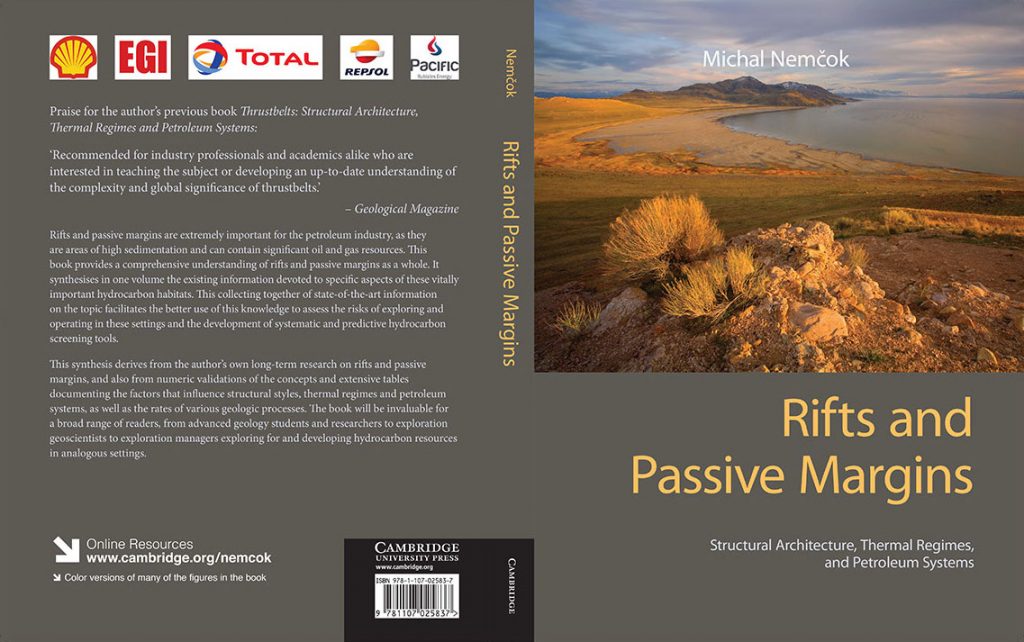
Rifts and passive margins; structural architecture, thermal regimes and petroleum systems

(Reference: Nemčok, M., 2016. Rifts and passive margins: structural architecture, thermal regimes and petroleum systems. Cambridge University Press, Cambridge, 607 pp.)

Both the book and associated class have roughly similar contents:


Structural architecture


  1. Basic description of structural architecture
  2. Mechanics of rifting and transition to drift phases
  3. Determination of unstretched continental, thinned continental, proto-oceanic and oceanic crustal boundaries
  4. Determination of timing of rift and continental break-up events
  5. Role of lithospheric composition and compositional variations in evolving structural styles
  6. Role of pre-existing anisotropy in structural architecture in evolving structural styles
  7. Role of syn-extensional deposition and erosion in evolving structural styles
  8. Fluid flow systems

Thermal regimes

  1. Role of pre-rift heat flow in thermal regimes
  2. Role of structural and stratigraphic architecture in thermal regimes
  3. Role of syn-rift deposition and erosion in thermal regimes
  4. Role of deformation in thermal regimes
  5. Role of fluid flow in thermal regimes

Petroleum systems

  1. Introduction to hydrocarbons in rift and passive margin settings
  2. Models of source rock distribution, maturation and expulsion
  3. Models of reservoir quality distribution
  4. Sealing characteristics
  5. Models of hydrocarbon migration
  6. Trapping styles
  7.  Hydrocarbon preservation

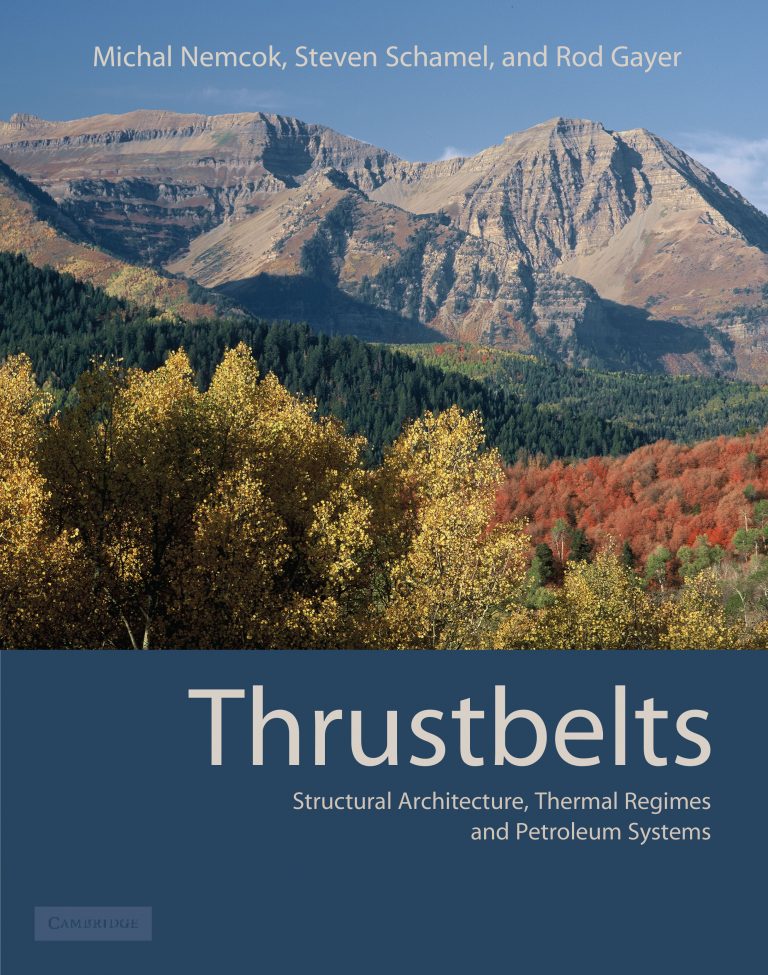
Thrustbelts; structural architecture, thermal regimes and petroleum systems

(Reference: Nemčok, M., Schamel, S and Gayer, R. A., 2005. Thrustbelts: structural architecture, thermal regimes and petroleum systems. Cambridge University Press, Cambridge, 541pp.)

Both the book and associated class have roughly similar contents:


Structural architecture


  1. Introduction to the topic of thrustbelts
  2. Mechanics of thrust wedges
  3. Mechanics of thrust sheets
  4. Thin-skin thrustbelt structures
  5. Thick-skin thrustbelt structures
  6. Determination of timing of thrusting and deformation rates
  7. Role of mechanical stratigraphy on evolving architectural elements and structural style
  8. Role of pre-contractional tectonics and anisotropy on evolving structural style
  9. Role of syn-orogenic erosion and deposition on evolving structural style
  10. Fluid flow in thrustbelts during and after deformation

Thermal regimes


  1. Role of pre-orogenic heat flow on subsequent thermal regimes
  2. Role of structural and stratigraphic architecture on thermal regimes
  3. Role of syn-orogenic burial and/or uplift and erosion on thermal regimes
  4. Role of deformation on thermal regimes
  5. Role of fluid movement on thermal regimes

Petroleum systems


  1. Hydrocarbons in thrustbelts: global view
  2. Source rocks in thrustbelt settings
  3. Maturation and migration in thrustbelts
  4. Seals and traps in thrustbelts
  5. Reservoir destruction or enhancement due to thrusting
  6. Remaining petroleum potential of thrustbelts

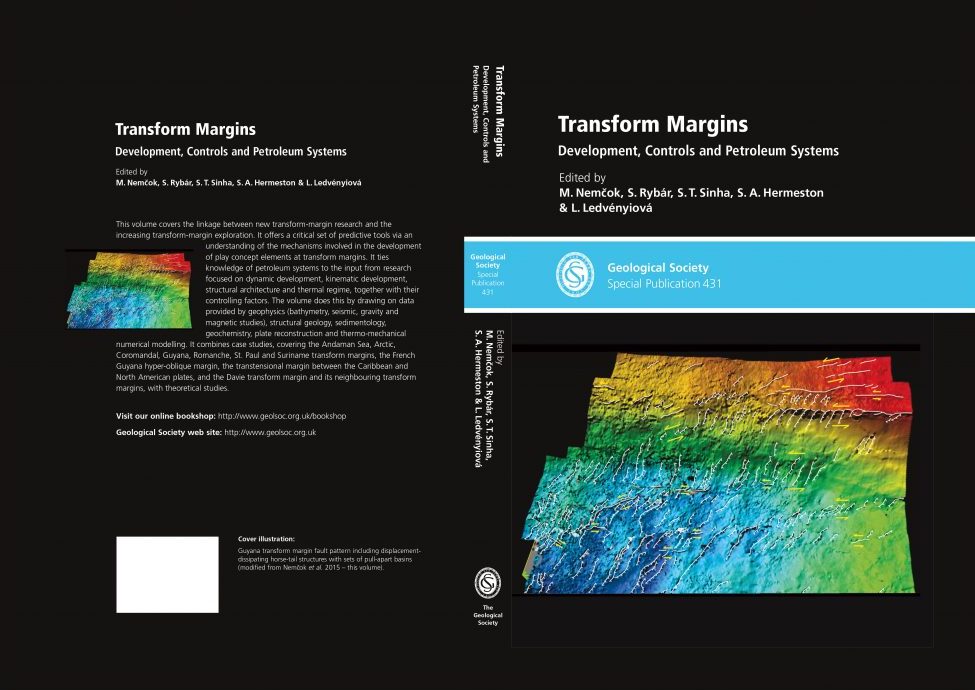
Transform margins; development, controls and petroleum systems

(Reference: Nemčok, M., Rybár, S., Sinha, S. T., Hermeston, S. A. and Ledvényiová, L., (Eds), 2015. Transform margins: development, controls and petroleum systems. Geological Society of London Special Publication No 431, http://doi.org/10.1144/SP431.)

Book and associated class have roughly different contents. The class contains:


Structural architecture


  1. Basic description of structural architecture in strike-slip and transform margins settings
  2. Mechanics of strike-slip faulting and transition to drift phases
  3. Role of pre-extensional tectonics and anisotropy on evolving sheared margin structural styles and the effects of pre-break-up tectonics/anisotropy on passive margin structural style
  4. Role of syn-extensional deposition and erosion on evolving structural styles of sheared margins and effects of tectonics on deposition and erosional patterns
  5. Fluid flow models along continental transfer fault systems, transforms and oceanic fracture zones

Thermal regimes


  1. Role of pre-rift heat flow in thermal regimes
  2. Role of deformation in thermal regimes
  3. Role of fluid flow in thermal regimes

Petroleum systems


  1. Models of source rock distribution
  2. Reservoir rock deposition in strike-slip and transform margin settings
  3. Models of hydrocarbon migration

LECTURE EXAMPLE:

NOTE:


Apart from a regular format of a 1 semester-long class, all four classes can be taught as block courses. Each of them can be tailored to 1-day, 2-day, 3-day, 4-day or 5-day short course, based on your time interval specification, from the aforementioned contents with topics to choose from.


When requesting instructor to cover specific topics in a short course tailored for a specific number of days, you need to know that a number of 2-3 topics can be usually covered per day. Daily load includes 6 net hours of class, excluding coffee breaks and lunch break. Presentations are done in informal way, i.e. questions are asked at any time during their presentation. Apart from the PowerPoint slide presentations on chosen topics, a set of 4-5 exercises is included each day. They focus on interpretation of seismic profiles from various structural settings/features. The optimal number of attending people, because of the exercise logistics, is 15. A larger number is not a problem, apart from people having to wait for instructor to finish the round of discussions with people making exercises to come back to them.


Both the regular 1-semester long class and block course can be taught either in person or via internet, using a prescription to the web site containing videos of individual lectures.